Hiding in plain sight…

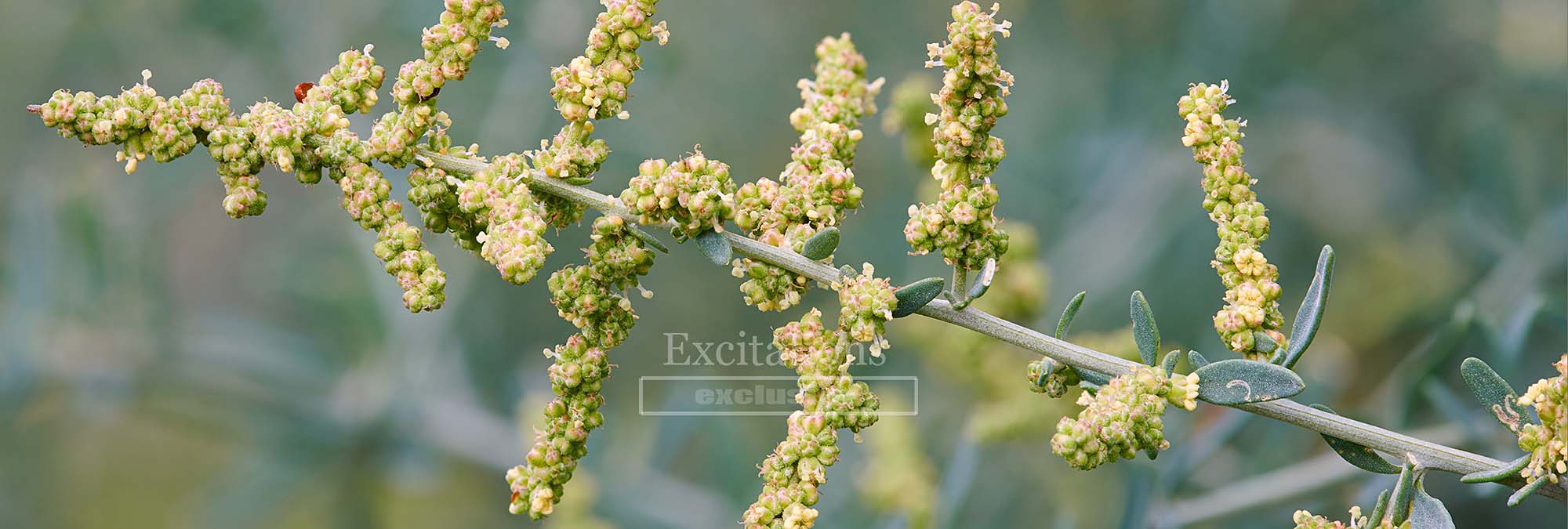
Chenopodium nitrariaceum, common name Nitre Goosefoot, macro photo of a section of the flower stem of this Australian native plant.

Not all Australian native plants are eye-catching exhibitionists. Some are tiny and hide away from observers, others are so nondescript that you walk past without even noticing them.

Today, I would like to take a look at a native plant that we often walk right past, without giving it a second glance.
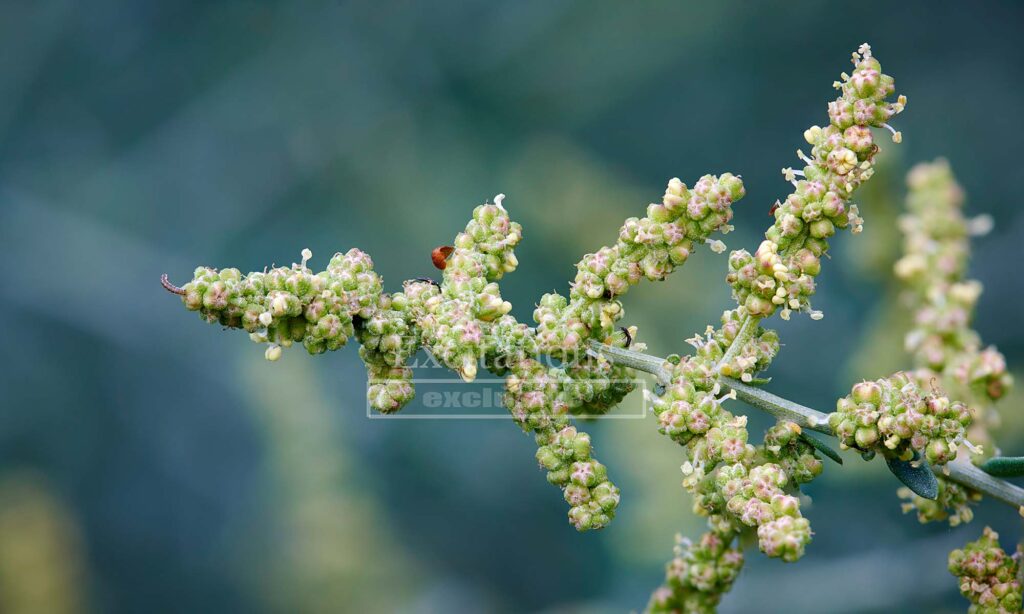
Macro photography detailing the shape of flower buds and flowers of Chenopodium nitrariaceum, or commonly known as Nitre Goosefoot. The photo is highly detailed against a natural background, photographed on location. Also clearly visible are a number of insects and a single tiny grub. Stockphotos of Australia, Native plants.

The flowering stems of Chenopodium nitrariaceum, commonly known as Nitre Goosefoot.

The flowers form a dense cluster of tiny, rounded flower heads packed tightly along branching stems. In this macro view, the flowers are just beginning to open, with small, pale stamens emerging from the soft green and pinkish clusters, giving the plant a surprisingly delicate look up close. The branching structure creates an almost coral-like pattern, typical of many chenopod species found across inland Australia. Adding a bit of life to these Australian native plants, several tiny insects and grubs are moving amongst the flowers, likely feeding or sheltering within the dense clusters. It’s a nice reminder that even these tough saltbush plants growing in harsh Australian conditions support their own little ecosystem of insects and microfauna.

Mildura Wildflower Season.

The end of the Mildura wildflower season is fast approaching. We were out and about the other day looking for that perfect shot of the multitude of yellow Senna and Wattles still in flower.

Grevillea huegelii — Comb Grevillea, Mildura district, Victoria, Australia.

We literally stumbled across this lovely hidden gem — Grevillea huegelii, more commonly known as Comb Grevillea or Comb Spider-flower — growing quietly in a roadside nature reserve near Mildura in north-west Victoria.

Compared with many of the spectacular hybrid Grevilleas found in Australian gardens, the wild form is a much more understated plant. But what it lacks in garden-centre flamboyance, it makes up for in character. This is a genuine survivor, perfectly adapted to the semi-arid conditions of the Mildura and Murray Mallee region, where long, hot summers, low rainfall and poor soils quickly sort out the tough plants from the rest.

Comb Grevillea is a native Australian shrub with distinctive narrow, divided foliage and unusual deep red flowers. The flowers produce long red styles tipped with contrasting yellow pollen presenters, giving them the delicate spider-like appearance responsible for the common name Comb Spider-flower.

Plants such as this are easily overlooked. They may be growing beside a quiet road, along the edge of mallee woodland or tucked into patches of remnant native vegetation where most people would drive straight past without noticing them.

That is one of the pleasures of Mildura wildflower season. It is not always about vast carpets of colourful flowers. Sometimes the most interesting discoveries are individual native plants that have quietly survived for years in difficult country.

For photographers, the Mildura and Sunraysia region offers an enormous variety of native plants, wildflowers, mallee landscapes and small botanical details that change throughout the seasons.

This photograph of Grevillea huegelii near Mildura, Victoria, is available through our Australian stock photography archive, together with other images of Australian native plants, wildflowers and Murray Mallee landscapes.

Thunderstorms in southern Australia

Low level, dramatic storm clouds over salt lake southern Australia. Stock photo by excitations and stock photos Australia

Thunderstorms are a common occurrence in southern Australia, particularly during the summer months of December to February. The hot and humid conditions in the region during these months create the perfect environment for thunderstorms to form.

Time-lapse stock footage of thunderstorms brewing in southern Australia.

More weather stock video clips here

The formation of thunderstorms is a result of the combination of several meteorological factors, including warm air rising, the presence of moist air, and instability in the lower atmosphere. As warm air rises, it cools and condenses into clouds, and when the clouds become sufficiently tall, thunderstorms can develop.

The southern regions of Australia, particularly along the coast, experience some of the highest rainfall during the summer months, with thunderstorms often bringing heavy rain and strong winds. The sudden downpour can cause flash flooding and road closures, disrupting daily life for residents.

Violent thunderstorm sweeps over a saline drainage lake near Mildura, Victoria, Australia. Not digitally retouched, available for licensing, contact us

However, thunderstorms can also bring much-needed relief from the heat, especially in rural areas where the intense summer heat can cause heat stress in livestock and damage crops.

Despite the potential for disruption, thunderstorms are a natural and important part of the meteorological cycle in southern Australia. They help to regulate the temperature, distribute moisture, and provide a source of water for the region’s vegetation.

License here

In conclusion, thunderstorms are a common occurrence in southern Australia during the summer months and can bring both benefits and challenges. It is important for residents to be prepared for the potential impacts of thunderstorms and to take necessary precautions, such as seeking shelter during severe storms and avoiding driving through flooded roads.

We have more cloud formations in our natural backgrounds archive.

Statement on the use of AI in our images Hint, AI wasn’t used in any of these images:)